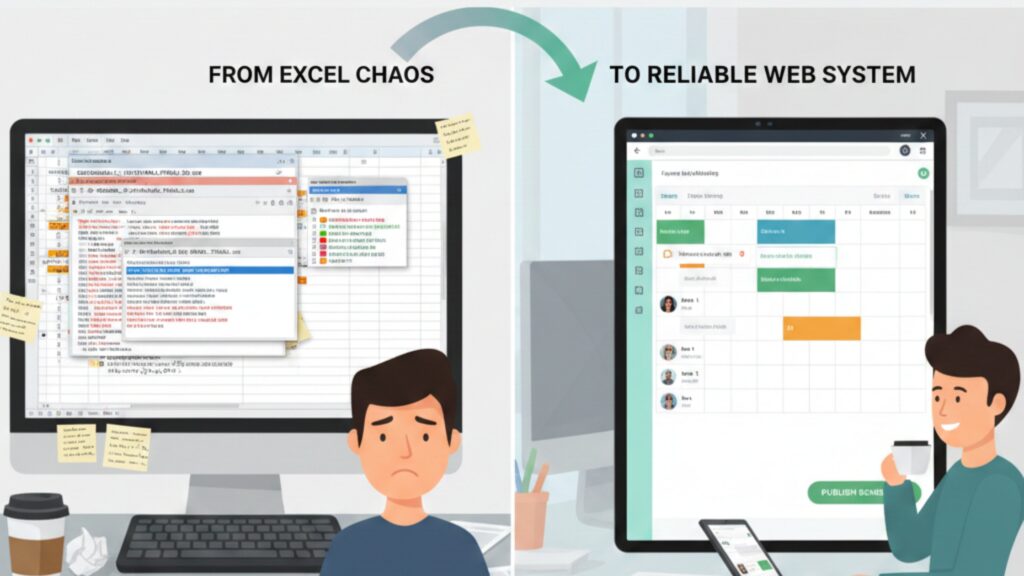
Many teams manage staff schedules using Excel.
While it works initially, problems appear as operations grow then formulas break, multiple versions circulate, and real-time availability becomes unclear.
This project demonstrates how an Excel-based shift scheduling workflow was converted into a clean, web-based scheduling system designed for daily operational use.
The goal was not to add complexity, but to remove risk, confusion, and manual effort.
Demo
The Problem (Before)
The original workflow relied entirely on spreadsheets.
Common issues included:
- Manual edits frequently breaking formulas
- Multiple copies of the same file causing confusion
- No real-time view of staff availability
- Difficult to use on mobile devices
- High risk of double-booking or missed shifts
- Time wasted confirming schedules via calls or messages
As the number of shifts increased, the spreadsheet became harder to manage and scale.
The Solution (After)
The Excel workflow was replaced with a centralized web-based shift scheduler.
Key improvements:
- One shared system with real-time updates
- Clear visibility of staff availability and assignments
- Built-in checks to prevent scheduling conflicts
- Mobile-friendly access for managers and staff
- Reduced manual work and fewer errors
The system provides a single source of truth for shift planning and day-to-day coordination.
Outcome & Value
- Reduced scheduling errors
- Improved visibility for managers
- Faster shift updates and confirmations
- Scalable structure that supports growing teams
This approach helps teams spend less time fixing spreadsheets and more time running operations.
Who This Is For
- Staffing agencies
- Hospitals & clinics
- Field service teams
- Businesses managing rotating or on-call shifts
If your team is still managing critical schedules in Excel, this project shows what a more reliable and scalable alternative can look like.
Contact us now for a free consultation and quote!